Define the job
Name the audience, offer, placement, and one action you want viewers to take. Include the product facts and any claims that must be supported; vague inputs make it harder to judge whether a creative is useful.
Creative guide
The best AI ad creatives are not simply polished images or videos. They make a specific offer clear to a specific audience, suit the placement, and give a team useful variations to test. Aiadcreatives helps you evaluate the idea before judging the finish.

AI ad creatives are advertising concepts or assets developed with AI assistance; the best ones connect an audience, a message, and a clear next step.
Compare the capabilities that matter when choosing a tool for creative development.
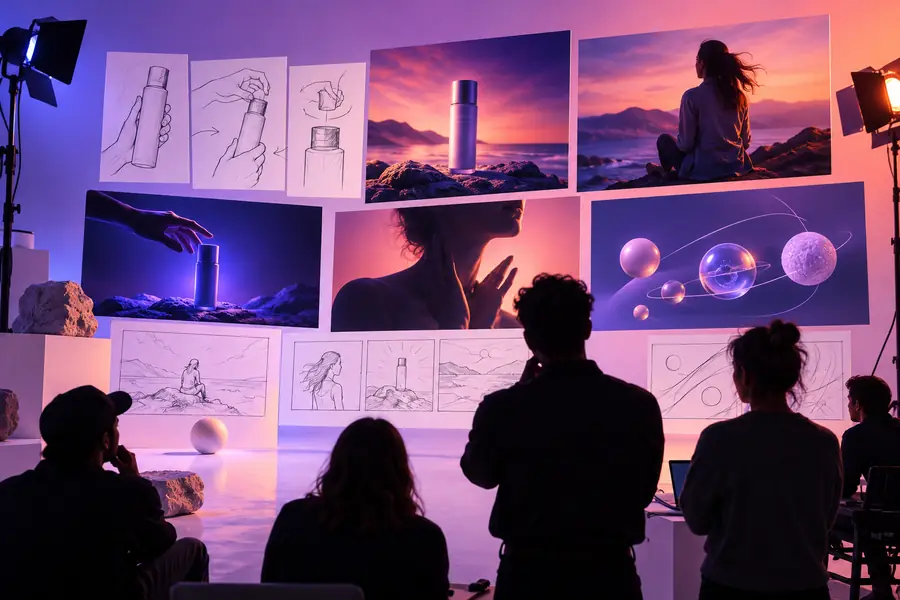
See how different ad concepts can express a product benefit.
Explore what changes when a still product image becomes a video concept.
A strong workflow starts with the brief, not a visual style. These three decisions make AI ad creatives easier to assess and improve.
Name the audience, offer, placement, and one action you want viewers to take. Include the product facts and any claims that must be supported; vague inputs make it harder to judge whether a creative is useful.
Develop alternatives around different hooks, such as a problem, a demonstration, or a benefit. Change one meaningful element at a time so reviewers can tell which idea each variation is testing.
Check readability, product accuracy, brand fit, and platform requirements. Then compare approved variations using campaign results rather than assuming the most polished-looking concept will perform best.
AI can speed up exploration, but it cannot establish whether a claim is true or whether an audience will respond. The best AI ad creatives still need a sound brief and human judgment.
AI can help with
Suggest several ways to open the same message.
A person must verify
Which opening reflects a real customer need.
AI can help with
Explore layouts, scenes, and stylistic alternatives.
A person must verify
Whether the product is depicted accurately.
AI can help with
Draft concise headlines and calls to action.
A person must verify
Whether every promise and qualification is supportable.
AI can help with
Help plan versions for different placements.
A person must verify
Current platform specifications and legibility on screen.
AI can help with
Offer multiple concepts from a defined brief.
A person must verify
Which differences are worth testing.
AI can help with
Provide hypotheses for a campaign test.
A person must verify
Actual results, attribution, and the decision to continue or revise.
Different teams need different kinds of evidence. A useful creative supports their decision rather than offering variation for its own sake.
Needs a few clear concepts for a new product without losing sight of the offer.
Use the best ai ad creative generator comparison to identify which capabilities fit the brief, then check every product detail.
best ai ad creative generatorWants to test different hooks while keeping the audience and offer consistent.
Review best ai ad creatives examples for distinct angles, then measure each approved variation against the same campaign goal.
best ai ad creatives examplesHas a product photograph and needs to plan a short-form video concept.
Explore image to ad video ai to understand the input-to-output workflow before writing the shot list.
image to ad video aiCompare the starting material with a proposed creative direction. The images illustrate a planning distinction, not a measured performance improvement.

An effective direction still needs an accurate offer, readable message, and review against the intended placement.
Start with one audience, one offer, and one message. Use those constraints to evaluate any AI ad creatives you develop, then verify the details before publishing.
The best AI ad creatives communicate a relevant offer quickly, look appropriate for their placement, and make the intended action obvious. There is no universal winning style: judge a concept against its audience, objective, and actual campaign results.
First, check whether someone unfamiliar with the product can understand the message at a glance. Then verify the product depiction, claims, readability, and brand fit. Performance data is the stronger test once the creative has been approved and published.
Neither approach is automatically better. AI can help a team explore more directions, while people supply the customer insight, factual checks, and final editorial decisions. Compare finished ads against the same objective rather than judging them by how they were made.
Choose the format that suits the message and placement. A still image may be enough to show a simple offer; video can help when motion or demonstration explains the benefit. Check the platform's current requirements and make sure the message remains clear on a small screen.
Specify the audience, product, offer, placement, desired action, brand constraints, and claims you can substantiate. Add examples of what must not appear if accuracy or compliance is a concern. A focused brief makes the resulting options easier to compare.